

Walk through a shopping district in China during the National Day holiday and two things are hard to miss. The malls are full again. And the gold counters are surrounded mostly by people in their twenties and thirties, trying pieces on rather than asking what a gram costs.
The crowds are real. So is the shift underneath them. In the last few months, the store owners we work with have stopped asking us about gold prices and started asking a different question: once somebody walks in, will they stay, will they try something on, and will they remember the store after they leave? We build custom jewelry showcases, watch counters, luxury retail fixtures and museum display cases from our factory in Shenzhen, and this is our read on what that question means for store design.
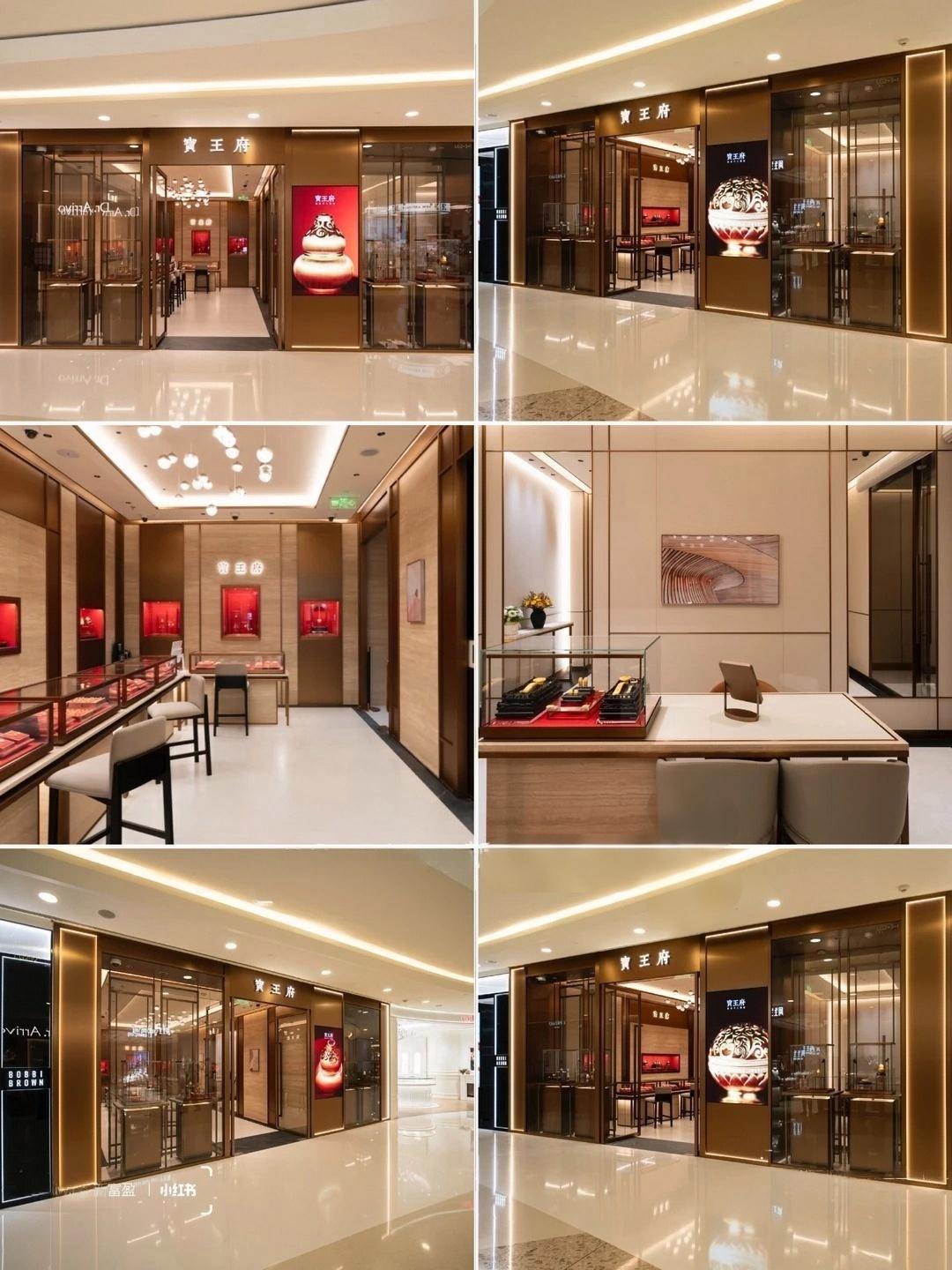
Two Sets of Numbers: Foot Traffic Is Back, Spending Is Pickier
Start with the malls. China's Ministry of Commerce tracks 78 major pedestrian streets and shopping districts. Between 1 and 6 October 2026, foot traffic in those areas rose 2.5% year on year and turnover rose 4.7% . People came back to physical retail.
Now the jewelry side. The 2026 China Jewellery Retail Market Insight, published by the World Gold Council together with China Gold News, describes the first half of the year as less volume, more value. Gold jewellery demand in tonnes fell year on year, while spending rose about 5% to RMB 144 billion, roughly USD 20 billion, the second-highest first half on record .
The part that matters more to store operators is why people buy. Self-purchase, meaning buying for yourself rather than for a wedding or a gift, has climbed for three years straight: 27% in 2024, 37% in 2025, 44% in 2026. It is now the leading reason for a gold jewellery purchase. Wedding purchases have fallen to 17% .
Put those two datasets together and the conclusion is not complicated. Customers did not stop spending. They became more deliberate. A decade ago the first question at a gold counter was how many grams. Today a younger buyer looks at the design, then the finish, then how the piece sits on a wrist or a neck.
The Store's Job Moved From Closing Sales to Hosting an Experience
Price comparison happens online now. What cannot happen online is trying a piece on, watching how it catches light, and judging whether the setting and the polish hold up at thirty centimetres.
That is why the physical store's value has moved. It used to be a transaction counter. It is now the place where the decision actually gets made, and the display case is the piece of furniture where that decision happens or does not.
We see the difference on site constantly. One store arranges product in neat rows, lights the cabinet brightly, labels the price, and stops there. Another leaves room to try things on, controls the pace at which a customer walks the floor, and uses light to explain design and craft. The second type gets more try-ons. In jewellery, a try-on is most of the way to a sale.
Three Details That Decide Whether the Design Reads
1. Lighting should explain the piece, not just brighten the cabinet
Light-weight gold with high labour content is common now, which means the value sits in line, texture, setting and polish. If a customer cannot see those, the design is invisible, and the piece is judged on price alone.
In our projects we work to a few basics. Colour rendering index of 95 or higher inside the cabinet, so gold stays gold and stones do not go grey. 4000 to 5000K neutral-cool light on the main display, for white metal and diamond brightness. Around 3000K warm light in the try-on area, so skin tones and product both look natural. Cabinet illuminance set above ambient illuminance, so the eye is pulled to the product instead of the room.
Brighter is not better. Mixed colour temperatures, hot spots and low CRI will flatten even a well-made piece.
2. Glass quietly discounts everything behind it
Many renovation budgets go into the cabinet shape and the metal finish, and almost nothing into the glass. Then the customer stands at the counter and sees their own reflection, the ceiling spotlights, and a faint green edge. The product loses value before anyone says a word.
Toughened glass, ultra-clear low-iron glass and anti-reflective glass solve different problems. For main display in a mid-to-high-end store, an ultra-clear substrate with anti-reflective treatment gets close to a no-glass look. For high-value single pieces, laminated safety and UV filtering are worth the extra cost. Glass is the medium between the customer and the product. The cleaner the medium, the more the product has to say.
3. Layout and empty space decide whether people stop
More cabinets is not the same as more sales. How island counters, wall units and freestanding vitrines are arranged, whether the route from the entrance to the try-on area is easy to follow, whether key pieces have their own place to be looked at, all of that governs dwell time.
A good plan lets a customer drift toward the category they came for and gives them somewhere to stand. A cramped one, full of dead ends, gets a single lap and an exit. Space has rhythm, and that rhythm is the first impression a brand makes.
What We Tell Brands in a Slow Market
Some people read the current numbers as bad news for physical retail. Our read is narrower. What is being displaced is a specific format: the store that only stores stock. Stores that present product well, and staff it well, are still earning their customers.
Three positions we hold, and say out loud to clients:
- Do not chase attention with decorative gimmicks. Materials, lighting, glass, hardware and edge detailing are what carry a store for ten years.
- Spend where the customer can feel it. Seeing product clearly, trying it on comfortably, moving through the store without friction. Those beat decorative volume every time.
- Respect the product and the customer's judgement. A display case should present design and craft honestly, not mask a weak product with packaging.
FAQ
What CRI should jewelry display lighting have?
95 or above in the main display area. Below that, gold and coloured stones start to shift, and customers notice without being able to say why.
Is ultra-clear glass worth the cost for a small store?
On the main display run, yes. It is the surface customers look through most. Secondary cabinets can use standard toughened glass if the budget is tight.
How much floor space should be left for trying pieces on?
Enough that a customer does not feel watched. In most stores we plan, the try-on zone takes 15 to 20% of the selling floor, sits off the main walking route, and has its own light temperature.
About Mabolo Display
Shenzhen Mabolo Display Products Co., Ltd., trading as Mabolo Display, has designed and manufactured custom jewelry showcases, watch counters, combination jewelry display counters, luxury retail fixtures and museum display cases since 2004. Our 20,000 m² factory runs six workshops covering glass, sheet metal, low-VOC coating, woodwork, hardware and final asseMaboloy, and our projects have shipped to brands in more than 150 countries. Standards we learned on museum work, on materials, protection and tolerance, are the same standards we apply to commercial retail.
If you are planning a new store or upgrading an existing one and want to talk through layout, cabinet specification and lighting, send us your floor area, product category and brand positioning, and we will come back with a direction.