

The most expensive sentence in the jewelry trade is: "the case was standard." When a claim adjuster asks what your display cases are made of, "standard" is not an answer. This post lists the five specifications insurers and safety regulators actually check, and what they cost you when you skip them.
Why the Case Itself Is Now a Insurance Question
Smash-and-grab attempts on jewelry stores remain the loss scenario that underwriters lose sleep over, and store-security guidance from specialist jewelers' insurers says the same thing for two decades: glazing, locks and case construction are first-line defenses, in front of cameras and alarms. The regulatory world moved the same direction. Chinese security regulations for gold and jewelry retail outlets require counter and display glass to use certified bullet-resistant or burst-resistant laminated material - Jiangsu province's operating security code says display counters must use national-standard bulletproof composite glass or authority-certified explosion-proof glass. Hunan's code goes further into operations: only one item may be taken out of the case for a customer at a time, and the first must go back before the second comes out.
In the US and Europe, the requirements are contractual instead of regulatory - they live in your policy's warranty clauses and in the underwriter's survey report. But the questions are identical. The difference is that at renewal, an insurer that cannot verify your case spec either prices the risk up or caps your display-stock sub-limit.
The 5 Specifications Your Policy Actually Checks

1. Glass type and grade - laminated is the line in the sand
Monolithic tempered glass fails the insurance conversation because of its success: it is designed to shatter completely on hard impact. A thief's hammer turns it into an open case in under two seconds. Laminated safety glass holds the pieces together on the interlayer; it takes repeated blows, and anti-smash grades (P6B-class in UK practice, BR-classes to EN 1063, GA 165 national standard classes in China) resist determined attacks far longer. The US market uses ANSI Z97.1 and CPSC 16 CFR 1201 as the safety-glazing test standards, with SGCC third-party certification as the way an adjuster verifies the claim. For high-value stores, the practical spec is: laminated glass on all stock cases, anti-smash grade on street-facing island cases, and the test certificate kept on file.
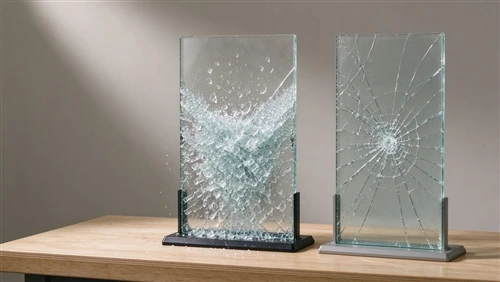
2. Locking hardware - the cylinder class matters more than the brand
Insurers ask three questions: What keyway (is it a registered, control-cut key or a generic one cuttable anywhere)? Who holds keys (numbered, controlled, or copies at the mall kiosk)? What happens at display time (does the whole store open with one key)? High-security cylinders with restricted key blanks, keyed-different by department, and drawer locks that keep trays locked while a door stands open are the combination that survives a survey. Keyed-alike across all cases is the single most common finding we see, and the most expensive to defend in a claim.
3. Anchoring and case stability
A case that can be lifted, tipped or dragged is a case your insurer treats as a storefront sign. During our post-2026 audit of museum incident reports (see our article on the British Museum porcelain fall), we kept returning to the same engineering point: a fixed or weighted display system is not optional once the object or the fixture is valuable. The retail version of that lesson: island cases bolted to the floor or linked case-to-case; wall units into studs or concrete; glass shelves retained by pins, not friction pads alone. Fifteen minutes at installation, a five-figure difference at claim time.
4. Alarm and sensor integration points
Underwriters increasingly expect glazing sensors or case-contact alarms on stock cases. The design detail that decides whether this gets done properly is hidden wiring paths built into the case from the factory: conduit channels, sensor pockets, and a service hatch that does not require demounting the mirror back panel. Cases retrofitted with surface-mounted trunking are the industry norm and look it. Specify integration at BOM stage and it disappears into the joinery.
5. Document trail - certificates, spec sheets, layout photos
If it is not on paper, it does not exist for the insurer. Request from your case supplier: the glass certificate (standard, class, thickness), hardware model and cylinder class, anchoring detail drawings, and a dated photo set of the finished install. One page in your claim binder saves a month of adjuster correspondence.
What Good Specs Do to Your Premium
Carriers do not publish rate tables, and anyone promising you "RC3 glass = 15% off premium" is selling something. What we can say from supplier-side experience: documented case security moves two things at renewal - the survey score and the display-stock sub-limit - and both shape price. The Hartfords and specialist brokers of the market write jewelry policies around premises security; when your cases match what their surveyors are trained to look for, you stop losing coverage you assumed you had. The real ROI is on the bad day: the claim that would have been denied for "inadequate protective storage" gets paid.
A One-Page Pre-Purchase Self-Check
Before you sign a case order, tick these boxes. After the list, ask your supplier for the spec sheet that answers every line - if the answers are vague, so is your claim file.
| # | Check | Pass condition |
|---|---|---|
| 1 | Glass construction | Laminated safety glass on all stock cases; anti-smash grade on street-facing units |
| 2 | Glass certificate | ANSI Z97.1 / 16 CFR 1201 / EN or GA class documented, SGCC or third-party cert available |
| 3 | Locks | High-security cylinder, restricted keyway, numbered keys, keyed-different by zone |
| 4 | Display-time risk | Trays stay locked while doors open; one-item-out workflow physically easy |
| 5 | Anchoring | Floor fixings or inter-case linking on every island case; wall units into structure |
| 6 | Alarm integration | Factory-built wiring paths, sensor pockets, service hatch |
| 7 | Fire context | Materials away from spotlights rated; no combustible film on escape-route glazing |
| 8 | Claim binder | Spec sheet + certificates + install photos delivered at handover |
Fire deserves its own line because insurers and fire marshals look at it together: LED lighting at safe distance from papers and packaging, low-smoke materials inside the case, and nothing that turns a display into a torch on an escape path. The good news is that modern case engineering - steel carcasses, glass shelving, 24V LED - is already the fire-safest version of the product. The bad news is that cheap variants of every one of those three are exactly what you will be asked about.
Related reading: what the Shuibei gold rush taught us about showroom security · why a bowl fell inside a museum case and what it means for display case safety
Get an Insurance-Ready Spec Sheet With Your Quote
Every Mabolo Display project quote can come with the documentation pack an insurer expects: glass class, cylinder specification, anchoring drawings, lighting ratings. Tell us your policy's wording or send your surveyor's last report through our contact page, and we will match the case spec to it - line by line, before you sign, not after a claim.
FAQ
Toplifting or side-opening - which is safer for insurance?
Side-opening with locked tray drawers keeps one-item-out discipline physical. Top-lift island cases expose the whole tray field in one motion - the layout adjusters dislike.
Is anti-smash laminated glass worth it over standard laminated?
For street-facing cases, high-value stock or prior incidents - yes, and keep the certificate. For interior-only cases, documented standard laminated usually satisfies the survey.
Do I need a new policy endorsement if I upgrade my cases?
No endorsement needed, but send certificates and photos to your broker now. Where your policy carries a security warranty, upgrades move you from "breach risk" to documented compliance at survey time.