


A display case fails in two places first: the lining you can see and the hardware you can feel. Nobody budgets for either until a customer points at a faded tray or a door that sticks mid-swing.
You do not need one routine for the whole store. You need four, sorted by lining material, plus a three-step check you can run on any case in ten minutes. Intervals below are recommended practice for a shop open six to ten hours a day with staff handling the cases. Dust, coastal air and hand cream shorten them.
A cleaning schedule by lining material
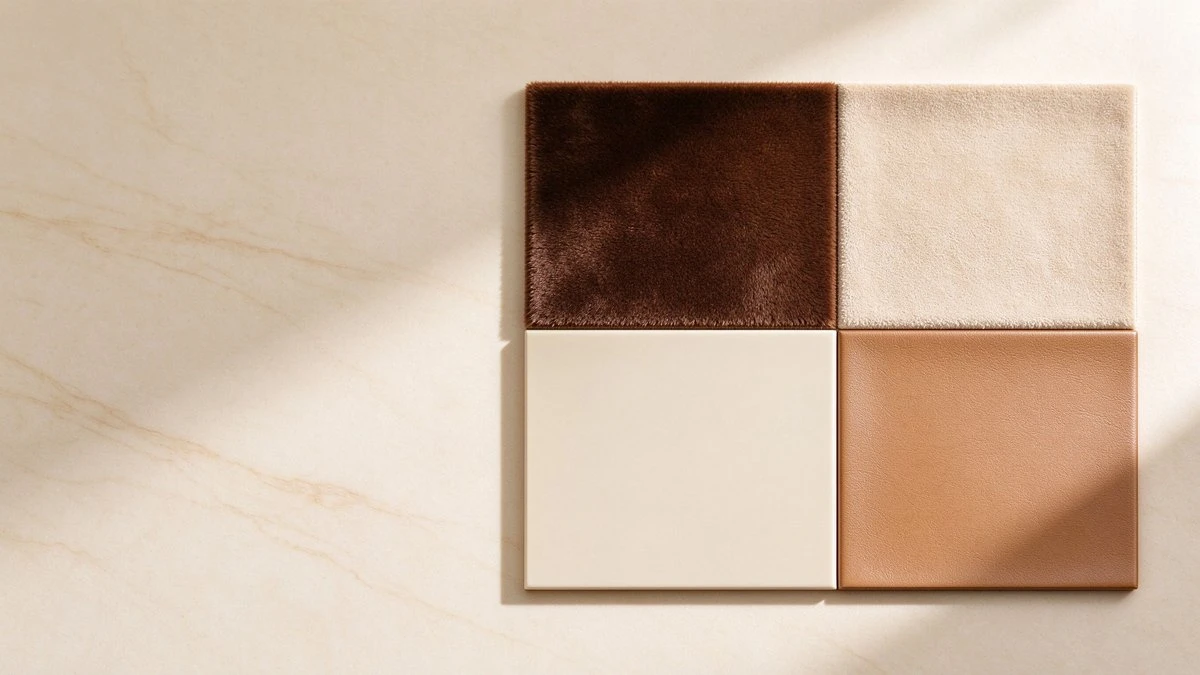
| Lining material | Routine | Deep clean | Recommended tools | Never use |
|---|---|---|---|---|
| Short-pile flocked velvet | Brush the pile in one direction with a dry soft brush weekly, then vacuum with a soft-brush head | Every 6–12 months | Soft-brush vacuum head, natural-hair brush, lint roller | Chlorine bleach, soaking, steam on the fabric, stiff brushes that pull the pile |
| Long-pile velvet | Same weekly brushing, plus rotate display pads so the pile is not crushed in one spot | Every 6–12 months; steam in the room, never on the fabric, to lift crushed pile | Brush-head vacuum, garment steamer kept at a distance | Bleach, direct steam contact, dry-cleaning solvents on a fitted pad |
| Microfiber / faux suede | Dry wipe with a clean cloth monthly | Quarterly with a dedicated microfiber cleaner | Two microfiber cloths (one damp, one dry), pH-neutral microfiber cleaner | Fabric softener, oily soap, anything leaving a film that grabs dust |
| Lacquer, matte and gloss | Dry soft cloth weekly; on gloss, wipe along the panel, not in circles | Quarterly with neutral-pH cleaner, then dry immediately | Microfiber, neutral-pH cleaner, a separate dry cloth | Alcohol, ammonia glass cleaner, abrasive paste, silicone polish on matte |
| Leather (watch cushions, pads) | Dust weekly | Every 3–4 months, a little balm worked in and buffed off | Leather balm or cream, soft cloth | All-purpose wipes, solvent cleaners, thick polishes that seal the surface |
Two habits matter more than the products. Use two cloths: one damp to lift soil, one dry immediately after. Residual moisture is what rings a lacquer panel and leaves a map on velvet. And work top-down, back-to-front, so a dirty cloth never drags across an area you already finished.
Velvet fades near windows, and it is UV, not dust
Within two or three meters of a storefront, the window-facing lining goes lighter than the lining at the back inside a season or two. Flocking dye breaks down under UV and heat load. The pile is not dirty; it is chemically changed, and no cleaner puts color back.
Three fixes, cheapest first. Rotate pads every few months so fading stays even. Fit UV film to the window-side glass - filter rates vary by product, so take the figure from the glass supplier's spec sheet rather than guessing. Or move the case out of the direct line. One distinction: a UV-absorbing interlayer in laminated glass and a surface film do similar work, but a film can be replaced and an interlayer cannot. If you already have laminated glass, ask how much UV it blocks before spending on film; the same glass logic decides what a conservation-grade display case can and cannot do for a light-sensitive piece.
The 3-step self-check for a squeaky door or a sticky slide
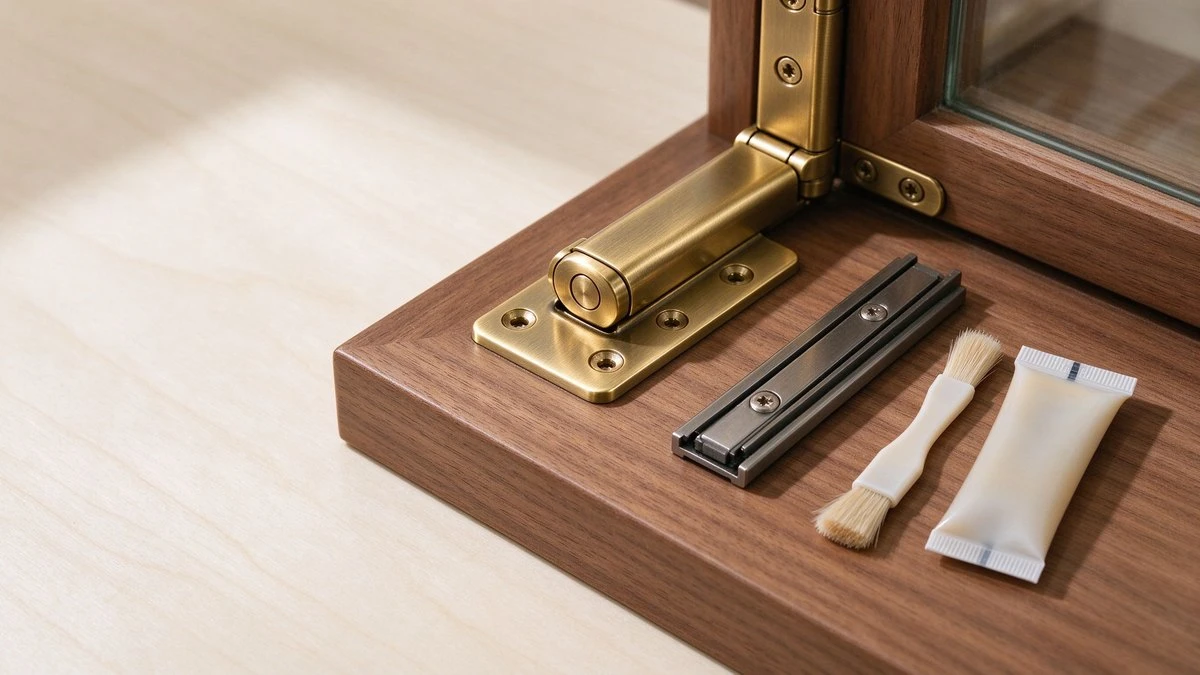
Run this on an empty case. Tools: a phone, a screwdriver, a dry brush, tweezers.
- Find out what is making the noise. Open and close ten times, slowly, and record it. Play it back with the phone near the hinge, then the frame edge, then the slide. A tick at the pivot is a hinge or screw problem. A rub that changes as the door swings is the cabinet touching the frame - alignment or swelling, and lubricant will not touch it. Skip this step and you will oil a door that needs a 0.5 mm shim.
- Hinges. Switch the case lighting off first, then brush dust out of the knuckle dry; oil over grit makes grinding paste. Check screw torque at hand-snug plus a quarter turn. Loose fixings in a soft core cause most sagging doors, and overtightening strips them. Then a small amount of silicone or lithium grease on the pin. Avoid a general-purpose penetrating oil such as standard WD-40 on a case hinge: it is built to thin and travel, creeps out, drags dust into the knuckle, and dries gummy in a few months. If the door still sags with screws snug, the hinge is worn or the case has moved.
- Slides. Pull the tray and light into the track. Hair, velvet lint and one grain of grit cause most sticky runs; lift them with tweezers and a dry brush, not a wet cloth. Roll the drawer and check the wheel at each end - a flat spot on a plastic wheel feels exactly like a sticky track. Clean track, round wheels, then one thin spray of silicone on the rails worked in over ten cycles, and wipe the excess. A rail that looks wet will be dirty by Friday.
Three signs to stop and replace the part
- Play in the hinge. Lift the door leaf with the door open. Movement at the pin means a worn knuckle. Grease hides the noise for a month and does nothing about the sag - and a sagging glass door changes how the glass sits in its rebate.
- Stripped holes. If a fixing spins after two attempts with a slightly larger screw or a plug, the load path is gone. Replace the hinge or mounting plate.
- A drawer that jumped the track. Once forced out and back, rails are usually bent. Cleaning them buys a smooth week and then a worse drawer.
The cost case for checking it yourself

An engineer visit for realignment or hardware runs in the low-to-mid hundreds in local currency, before parts; travel and the day's minimum charge are what you actually pay. Our own service records for the first half of 2026 show most call-outs closed on site in under thirty minutes - a loose hinge screw, a tray of lint. The gap between wiping a track and booking an engineer is the entire cost difference, and the DIY version is a screwdriver and a tube of grease.
That is not a case for improvised hardware. Generic hinges and slides are built for cabinet doors and office drawers, not a case with a glass top that people lean on. Three things fail first: the load sits on fewer fixings because the door is glass; the swing is limited by what stands behind it, so a hinge rated for a wide free arc works at 60 degrees under load; and hinge, slide and lock share one frame, so a door that drops 1 mm stops the bolt meeting the strike. When a supplier matches parts, they match bore size, leaf thickness and lock position to the carcass you own. Mabolo Display supplies original hardware against the case number on the plate under the deck, which is why we ask for that number rather than a photo of the hinge. The same structural logic sits behind what keeps a mounted object on its shelf, as in this account of a museum object that came off its mount.
FAQ
How often should I vacuum velvet lining?
Weekly with a soft-brush head for a store open six to ten hours a day. Brush with the pile first, then vacuum, and keep the nozzle moving - holding it in one spot pulls the pile out. A quarterly deep clean is enough unless the case sits near a window or traffic is heavy.
Can I use alcohol on a lacquered panel?
No. Alcohol softens and clouds many lacquer finishes and leaves a dull patch you cannot polish out without refinishing. Use neutral pH on a damp cloth, dry immediately with the second cloth, and test in an inside corner.
What should I keep in the store for case maintenance?
Silicone grease for hinge pins and slides, silicone spray for track rails, two microfiber cloths, and a neutral-pH cleaner. Skip penetrating oils and household aerosols. If the case has a soft-close damper, do not spray it: dampers are sealed units, and oil on the piston makes them chatter.
Next step
Book a hardware replacement, or ask us for the display case hardware spec sheet: hinge bore and leaf sizes, slide load ratings, lock cylinder dimensions, and the grease types we recommend. Send your case number and we confirm what fits before you order.